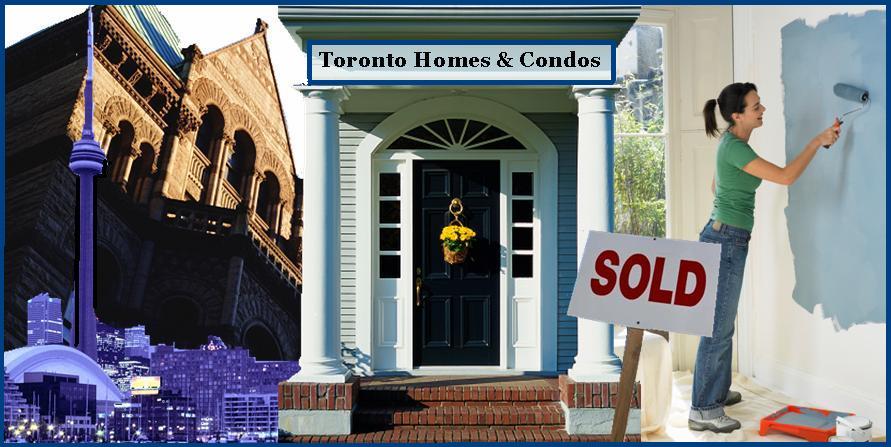
Incentives for first time home buyers, or for home owners to make improvements on their homes were included in the 2009 Federal Budget. Here are some examples of what is being offered:
RRSP Home Buyers Plan Improved
First time home buyers have had an increase in the withdrawal amount allowed from their RRSPs, from $20,000 to $25,000.
Money withdrawn from the RRSP is to be paid back within 15 years. If it is not, it will lose its tax deferred status, and if scheduled annual payments cannot be paid in full, the unpaid amounts must be reported as income.
Tax Credits For Home Buyers
First time home buyers have also seen some relief on a tax credit that can provide up to $750 in tax relief on the purchase of their first home. To qualify neither the homeowner, their spouse or common law partner can have owned and lived in another home in the year of purchase or any of the four preceding years.
Green Grants
Home and property owners can apply for grants of up to $5000 for making eligible energy-efficient improvements, such as upgrading furnaces, increasing insulation etc.
Tax Credits for Home Renovations
Now through January 31, 2010, homeowners can claim a tax credit for up to 15% of renovation expenses between $1,000 and $10,000. Listed below are some examples of what does and does not qualify:
Eligible
*renovating a kitchen, bathroom or basement
*new carpet or hardwood floors
*building an addition, deck, fence or retaining wall
*a new furnace or water heater
*painting the interior or exterior of a house
*resurfacing a driveway
*laying new sod
Ineligible
*purchase of furniture and appliances (e.g. refrigerator, stove, and couch)
*purchase of tools
*carpet cleaning
*maintenance contracts (e.g. furnace cleaning, snow removal, lawn care, and pool cleaning)
For more information on housing related stimulus in the 2009 Budget, visit the Canada Revenue Agency website at www.cra-arc.gc.ca and search for “Home Buyers Plan.”
Showing posts with label real estate. Show all posts
Showing posts with label real estate. Show all posts
Thursday, March 19, 2009

Tuesday, January 27, 2009
The Effects of the Land Transfer Tax on Real Estate Sales in Toronto
You’ve probably seen the news lately: real estate sales down by 50% compared to this time last year! Although there are many things to take into consideration like the changing economy and hesitation on behalf of Canadians while watching the real estate market in the states, there are still more sides of the story…
Take, for example, the effects of the Land Transfer Tax, a levy of up to 2% in addition to the province’s taxes, which took effect Feb. 1, 2008.
The C.D. Howe study, “Sand in the Gears”, reported a drop in the number of houses sold in Toronto from February, when the tax was implemented, until August, when the real estate market began to falter. Comparing Toronto sales with those in the suburbs, there has been a 16% decrease in sales and a 1.5% reduction in house prices.
City Councillor Shelley Carroll, the mayor's budget chief, is predicting that the effects felt by the land transfer tax should stabilize in a year or so, but added that the market was artificially inflated when some buyers hurried to purchase their property before it took effect.
None of us has a crystal ball to look into the future, but it will be interesting to see what the real estate numbers in February 2009 will look like. A little less askew?
Take, for example, the effects of the Land Transfer Tax, a levy of up to 2% in addition to the province’s taxes, which took effect Feb. 1, 2008.
The C.D. Howe study, “Sand in the Gears”, reported a drop in the number of houses sold in Toronto from February, when the tax was implemented, until August, when the real estate market began to falter. Comparing Toronto sales with those in the suburbs, there has been a 16% decrease in sales and a 1.5% reduction in house prices.
City Councillor Shelley Carroll, the mayor's budget chief, is predicting that the effects felt by the land transfer tax should stabilize in a year or so, but added that the market was artificially inflated when some buyers hurried to purchase their property before it took effect.
None of us has a crystal ball to look into the future, but it will be interesting to see what the real estate numbers in February 2009 will look like. A little less askew?
Tuesday, January 20, 2009
Property Tax Assessment Appeals
Recently homeowners in Toronto have received their property tax assessments in the mail and I have been asked for advice on what they can do if they feel the assessment is not an accurate reflection of the value of their home. You can appeal the assessment, and I myself have had success in lowering my property taxes by doing so. This may not be the case for everyone, but it might be something you are interested in pursuing nonetheless.
Metropolitan Property Tax Consultants (416-482-3000) are one of the companies in Toronto that provide such a service. They will charge you half of the amount of the savings on your property taxes, and in the case that there are no savings, there is no charge.
By lowering your property taxes you may not only save yourself money, but also increase the appeal of a property you have listed or are thinking of listing.
Metropolitan Property Tax Consultants (416-482-3000) are one of the companies in Toronto that provide such a service. They will charge you half of the amount of the savings on your property taxes, and in the case that there are no savings, there is no charge.
By lowering your property taxes you may not only save yourself money, but also increase the appeal of a property you have listed or are thinking of listing.
Monday, August 25, 2008
Investing in a Second Property
If you're thinking about buying a house or condo as an investment property, market conditions are definitely in your favour. While the resale housing market has seen a tremendous amount of activity from first-time buyers in the past year, it's also a perfect time for existing homeowners to invest in secondary residential properties.
With record-low interest rates and significantly lower prices it's hard to go wrong - unless, of course you lack the financial means to make the investment. After all, you have to be ready to meet all the obligations that come with owning more than your principal property. For instance, keep in mind that if you intend to rent out the second property, you'll also have to be prepared to deal with tenants and handle maintenance costs.
Leverage
Secondary home ownership is an attractive investment option because it gives you even more leverage than you have with your principal residence. Leverage is when a relatively small amount of your money controls a much larger asset - like a property.
The more leveraged you are, the greater the financial return on your down payment becomes if the value of your property increases. There are very few other investments which can be purchased with such a small percentage of your own money.
Getting Financing
You should be aware that many lenders place non-owner occupied deals in the high-risk category and it's not that unusual to find lenders who will not finance rental units at all - or those who will only finance them if they are insured.
Obviously, lenders will want to know whether the property will carry itself. (Is there sufficient rent to cover the mortgage payment?) Don't make the mistake of assuming that a rental income of $500 per month will carry a mortgage payment of $500 per month. Only a portion of the rent is used to pay the mortgage; the remainder must cover taxes, maintenance, vacancy, bad debt and expenses.
Costs
You should also be aware that the cost of obtaining a mortgage (for legal and appraisal fees) on a non-owner occupied property can be higher than the cost of obtaining a mortgage on an owner-occupied property, when more than one unit - such as a duplex or triplex is involved. Interest rates charged on rental properties might also be higher because some lenders view these properties as being a higher risk.
As mentioned above, the main responsibility of having a second property is being able to carry it financially. And if you're like most people, you'll probably have to rent it to someone as a result.
This is also a great deal of responsibility because you will have to maintain the property in addition to your own principal residence, and you'll be responsible for finding tenants who you trust and feel comfortable with.
This is also a great deal of responsibility because you will have to maintain the property in addition to your own principal residence, and you'll be responsible for finding tenants who you trust and feel comfortable with.
If you'd like more information about purchasing any type of residential property: from a first home to a second property or more, contact Elli or leave a message on the blog.
Wednesday, July 2, 2008
What to know when shopping for Condos!
For people who are in the market to own their own property but don’t necessarily want a house, a condo can be the next best investment. Since there are slew of new condos going up along the Toronto Waterfront and other exclusive areas (i.e. Young and Bloor) condos are proving to be prime real estate investments. However, before you pull out the pen and get ready to sign the deposit cheque, there are some things that you should know.
1. Ensure that it fits your needs – if you are going to be living in the condo instead of renting it out, you will need to make sure that the condo fits the style that you are looking for. Condos range from high to low rises, from townhouses to triplexes and knowing what you want to helps to narrow down the search for the right one.
2. Find out what costs are included – for instance, is parking extra? What about amenities like use of the party room or swimming pool? Are finishes included in the purchase price? Are utilities covered in the monthly condo fees (aka maintenance fees)? All of these are questions that you need to have answered. They can make or break a deal if you as a buyer assumes what is included in the purchase price of the condo without asking first.
3. Be aware of the rules and regulations – most condos have boards that regulate the condos and create by-laws associated with the upkeep and maintenance of the condominium complex. There can be restrictions on anything from pets to parking. The by-laws are designed to protect homeowners from living in a non-harmonious environment.
4. Find out about the boundaries – in a freehold, bare or vacant land condos the individual unit consists of the entire house, including exterior walls, roof and the land surrounding it. Before making a purchase, be sure to understand where your unit will begin and end.
Finding the right condo takes research but as with any home search it starts with what you want and what you would like to have. Familiarize yourself with the condo market by searching listings that are on MLS.ca and of course be sure to follow up with your agent for any properties that you may be interested in. You can also download a Condominium Buyers Guide from CHMC’s website.
For more information, leave a comment or email Elli.
1. Ensure that it fits your needs – if you are going to be living in the condo instead of renting it out, you will need to make sure that the condo fits the style that you are looking for. Condos range from high to low rises, from townhouses to triplexes and knowing what you want to helps to narrow down the search for the right one.
2. Find out what costs are included – for instance, is parking extra? What about amenities like use of the party room or swimming pool? Are finishes included in the purchase price? Are utilities covered in the monthly condo fees (aka maintenance fees)? All of these are questions that you need to have answered. They can make or break a deal if you as a buyer assumes what is included in the purchase price of the condo without asking first.
3. Be aware of the rules and regulations – most condos have boards that regulate the condos and create by-laws associated with the upkeep and maintenance of the condominium complex. There can be restrictions on anything from pets to parking. The by-laws are designed to protect homeowners from living in a non-harmonious environment.
4. Find out about the boundaries – in a freehold, bare or vacant land condos the individual unit consists of the entire house, including exterior walls, roof and the land surrounding it. Before making a purchase, be sure to understand where your unit will begin and end.
Finding the right condo takes research but as with any home search it starts with what you want and what you would like to have. Familiarize yourself with the condo market by searching listings that are on MLS.ca and of course be sure to follow up with your agent for any properties that you may be interested in. You can also download a Condominium Buyers Guide from CHMC’s website.
For more information, leave a comment or email Elli.
Thursday, June 12, 2008
Going Green - Making Your Home Environmentally Friendly
In this day in age with increasing advances in technology and higher standards of living, everything seems to be at our disposal. However, we have and continue to take the earth for granted.
There are varied opinions on what effect global warming will have on the earth in the future but It is there are steps that we can take to rectify this situation. Aside from buying a hybrid car it’s the small choices that can prove to be most beneficial.
Make your home energy efficient - by installing florescent blubs (these cost more than the average blub but last longer). When buying appliances, choose the ones that have the energy star symbol on them and in some jurisdictions, the city will offer up to a $100 rebate on the product you buy. Unplug unused appliances – even though the appliance maybe turn off it is still draining energy.
Change your windows- on newer homes this isn’t necessary but changing your windows in an older home will allow for better insulation of the home and hence better air circulation for heat or air conditioning.
Switch to unsustainable flooring – if you’re thinking of changing your flooring think about making the switch to unsustainable flooring. This type of flooring is made of natural materials such cork or bamboo and acts as a insulator for the floor because it retains the heat (great for those cold winter mornings).
Low flow faucets – come in a variety of styles that fit the theme of your bathrooms or kitchen and best of all you are conserving on your water consumption.
Keep recycling - there is a website www.greenhome.com where you can find a variety of earth friendly products. From cleaning products to bedding to personal care product this site allows you to shop from the comfort of your home all while making your contribution to saving our earth.
There are varied opinions on what effect global warming will have on the earth in the future but It is there are steps that we can take to rectify this situation. Aside from buying a hybrid car it’s the small choices that can prove to be most beneficial.
Make your home energy efficient - by installing florescent blubs (these cost more than the average blub but last longer). When buying appliances, choose the ones that have the energy star symbol on them and in some jurisdictions, the city will offer up to a $100 rebate on the product you buy. Unplug unused appliances – even though the appliance maybe turn off it is still draining energy.
Change your windows- on newer homes this isn’t necessary but changing your windows in an older home will allow for better insulation of the home and hence better air circulation for heat or air conditioning.
Switch to unsustainable flooring – if you’re thinking of changing your flooring think about making the switch to unsustainable flooring. This type of flooring is made of natural materials such cork or bamboo and acts as a insulator for the floor because it retains the heat (great for those cold winter mornings).
Low flow faucets – come in a variety of styles that fit the theme of your bathrooms or kitchen and best of all you are conserving on your water consumption.
Keep recycling - there is a website www.greenhome.com where you can find a variety of earth friendly products. From cleaning products to bedding to personal care product this site allows you to shop from the comfort of your home all while making your contribution to saving our earth.
Wednesday, June 4, 2008
Florida Bound – Canadians buying Real Estate in the US

With the real estate market being what it is in the US some Canadian home buyers would snub the thought of buying property south of the border. However, the truth is that this is the best time for Canadian home buyers to invest into the housing market especially in Florida.
In the past, buying property in Florida was thought to be for only retirees but that doesn’t hold true anymore. Due to the strong Canadian dollar, an excellent opportunity has presented itself and many Canadians who are not yet of retirement age are answering the call by investing in the US real estate market.
Florida is proving to be a real hot spot as more residential properties are being sold at nearly half off the price that the property would have been valued at this time last year. Builders in Florida are continually competing with each other by plunging prices of properties and don’t think that it’s just foreclosure properties that are available, new homes and condos are also being listed at considerably lower prices.
So are you convinced yet? Well, here are some other reasons to invest in a Florida property:
1. Florida has the lowest real estate prices in over 30 years.
2. Great investment opportunity as you can buy low and sell high.
3. The eventual US market rebound will mean a profit for you.
If this isn’t enough to put it into perspective, think of the fact that for the price of a cottage in Ontario, you can own a luxury property in Florida that you can enjoy at anytime of the year. May it be for your own personal use or for a vacation rental property the situation can only be win-win.
Want to find out more about properties in Florida? Contact me with your questions or leave comments on the blog.
Tuesday, May 27, 2008
Canada’s Expensive Homes

I was recently featured in an article in Forbes.com commenting about Canada`s Most Expensive Homes. Many home buyers especially new home buyers may wonder why would this matter to them?
As the prices of homes continue to rise, it represents the fact that Canada has a healthy housing market. Remember, this isn`t like the rise of the housing market in the 80`s. Many factors have changed such as the cost of living and the US subprime lending situation, the fact that Canada can sustain a healthy housing market bodes a definite positive for us Canadians.
Multi-million dollar homes are on the rise in Canada and that is mostly in part to baby boomers and their inheritances. In the first quarter of 2007, 1,237 homes priced at $1 million and up were sold in the GTA, Calgary and Vancouver[1]. From experience, I have seen the rise in the prices of homes in some of Toronto`s elite areas as it is reflected in the properties that I list on a continuous basis and can start at anywhere from $2 million and up. Although these classes of elite homes once known as "the carriage trade" are becoming a hot commodity, supply is rare.
Even though this seems like a big deal, Canada is still has a bit of a ways to catch up to our friends south of the border where these prices are not uncommon. In New York City, a buyer could easily spend $1 million dollars on a condo. It is important to bear in mind that buyers of these types of homes are concerned with the complete package of the home and what it has to offer. Whether it be the spectacular view or the unique features of the homes itself these homes represent the future of Canadian standards of living.
Read about Canada’s Most Expensive homes and see the pictures.
Next post topic: A Guide to the Real Estate Market
Next post topic: A Guide to the Real Estate Market
[1] http://www.forbes.com/2007/01/30/most-expensive-canada-forbeslife-cx_lk_0131canadasmostexpensivehomes.html
Thursday, May 1, 2008
Top 4 Features to look for in a Neighbourhood
Now that you’re in the market for buying a home, you may or may not have decided what type of neighbourhood you would like to live in. Choosing a neighbourhood is not just simply choosing a “nice area” based on a location that you prefer but buyers should also be looking for neighbourhoods with sustainable features when purchasing their home.
The Canada Home and Mortgage Corporation defines sustainable features as “an area that meets your needs while protecting the environment and leaving an affordable legacy.”[1] These types of features in an area can help to improve the quality of life as well as being a safe and pleasant place to live. These neighbourhoods can also include the following.
1. They provide close, convenient access to amenities such as work, schools, shopping, etc...This allows for people who are in these neighbourhoods to spend less time in cars driving and more time either commuting by public transportation or walking. This is a two pronged benefit because you are not only lowering the emissions levels being sent out into our environment, but also taking the time to invest in your health by walking or biking wherever possible.
2. They offer a variety of house types that give you the option of establishing a foundation within a neighbourhood that allows you to build roots, but also being an area that is able to move through life’s changes with you. For instance, you can find a neighbourhood that will allow you to purchase a home that you can start a family in. Then, as your family changes you can still stay within that same neighbourhood and find a home that best suits your changing needs.
3. They provide a safe and friendly atmosphere. No one wants to be stuck in a neighbourhood where they do not feel comfortable walking to the store. If you are going to build roots in this neighbourhood you want it to be somewhere that you will enjoy being.
4. It offers the best value for your dollar not just within the physical property but this refers back to the neighbourhood being easily accessible. Nowadays, most families have two cars for their household. However, if you are able to get around without the use of a second car then this cuts back on your costs for fuel and maintenance for two cars and therefore giving you a higher ROI.
As advantageous as sustainable features are, this option for choosing a neighbourhood is not for everyone. It isn’t advisable to look for a neighbourhood with these features if you are a home buyer who doesn’t want a smaller home to maintain or if you don’t mind commuting in traffic. However, with the benefits of sustainable features why wouldn’t you incorporate this into your home search?
You can find a list of Canadian cities that offer neighbourhoods with these important features at http://www.cmhc-schl.gc.ca/en/index.html.
[1] Thinking of Moving to A Different Home – www.chmc-schl.gc.ca/en/index.html
The Canada Home and Mortgage Corporation defines sustainable features as “an area that meets your needs while protecting the environment and leaving an affordable legacy.”[1] These types of features in an area can help to improve the quality of life as well as being a safe and pleasant place to live. These neighbourhoods can also include the following.
1. They provide close, convenient access to amenities such as work, schools, shopping, etc...This allows for people who are in these neighbourhoods to spend less time in cars driving and more time either commuting by public transportation or walking. This is a two pronged benefit because you are not only lowering the emissions levels being sent out into our environment, but also taking the time to invest in your health by walking or biking wherever possible.
2. They offer a variety of house types that give you the option of establishing a foundation within a neighbourhood that allows you to build roots, but also being an area that is able to move through life’s changes with you. For instance, you can find a neighbourhood that will allow you to purchase a home that you can start a family in. Then, as your family changes you can still stay within that same neighbourhood and find a home that best suits your changing needs.
3. They provide a safe and friendly atmosphere. No one wants to be stuck in a neighbourhood where they do not feel comfortable walking to the store. If you are going to build roots in this neighbourhood you want it to be somewhere that you will enjoy being.
4. It offers the best value for your dollar not just within the physical property but this refers back to the neighbourhood being easily accessible. Nowadays, most families have two cars for their household. However, if you are able to get around without the use of a second car then this cuts back on your costs for fuel and maintenance for two cars and therefore giving you a higher ROI.
As advantageous as sustainable features are, this option for choosing a neighbourhood is not for everyone. It isn’t advisable to look for a neighbourhood with these features if you are a home buyer who doesn’t want a smaller home to maintain or if you don’t mind commuting in traffic. However, with the benefits of sustainable features why wouldn’t you incorporate this into your home search?
You can find a list of Canadian cities that offer neighbourhoods with these important features at http://www.cmhc-schl.gc.ca/en/index.html.
[1] Thinking of Moving to A Different Home – www.chmc-schl.gc.ca/en/index.html
Monday, March 31, 2008
25 Years Strong!!!
As hard as it is for me to believe, this year will mark my 25th year providing real estate services. It’s been a fantastic journey and I have enjoyed every moment of it.
As a school teacher, I always had a strong interest in Real Estate. As I moved to sales with Mary Kay Cosmetics, my fervor for Real Estate grew and it was then that I decided to pursue a career in the hobby that I loved.
Since then, I have had the honour of holding esteemed titles such as; #1 Agent in Canada for Royal LePage for 12 consecutive years and #1 Agent in Toronto for the last 21 years; both of which, I am extremely proud of as it is a true reflection of recognition for hard work and dedication. Every sale still brings about the same adrenaline rush it did 25 years ago when I sold my first condo and it is this excitement that keeps me going.
All in all when it boils down to it, it’s not just the passion for my job that drives me, it’s all the experiences both good and bad and the people that I’ve had the pleasure to assist and of some of those professional relationships have evolved great friendships.
Here’s to 25 years strong…cheers!!!!
Want to ask Elli a question? Post a question or comment in the blog.
Subscribe to:
Posts (Atom)